
November opens its doors with a gentle melancholy. It is the month when the wind seems to whisper names, when falling leaves remind us that life, like them, transforms and does not end. In the liturgy, the Church invites us to look beyond the visible horizon, to place our hearts in communion with all those who have gone before us in faith and who now live, purified and hopeful, in God's merciful embrace. It is the month of the faithful departed, the time of eternal hope, the moment when love becomes prayer and memory becomes intercession.

The mystery of communion that does not die.
We believe in a God of the living, not of the dead (cf. Mt 22:32). Therefore, our prayer for the deceased stems from the certainty that death does not break the bonds of love, but rather transforms them. The communion of saints is that fascinating mystery that unites heaven, earth, and purgatory in a single spiritual embrace.
When we pray for our deceased loved ones, we are experiencing the most beautiful mystery of the Church: the communion of saints. It is that current of grace that flows from one to another, like a breath of faith. Saint John Chrysostom said: “Let us not hesitate to help those who have departed and to offer our prayers for them.”
At every Mass, when we pronounce the names of those who have passed on, we entrust them to divine mercy. It is as if we were saying to them: "I do not forget you. I believe in your resurrection. My prayer reaches you." In that instant, love conquers time.
A legacy from the Holy Scriptures
Sacred Scripture offers us a firm foundation for this practice of faith. The Second Book of Maccabees (2 Macc 12:44-46) recounts how Judas Maccabeus took up a collection to send to Jerusalem as an offering for the fallen soldiers, “so that their sins might be forgiven.” The text concludes with a luminous phrase: “It is, therefore, a holy and pious thought to pray for the dead, that they may be freed from their sins.”
The Gospel also leads us to hope in eternal life. Jesus proclaims: “I am the resurrection and the life. The one who believes in me will live, even though they die” (John 11:25). And in his parables, especially the parable of the rich man and Lazarus (Luke 16:19-31), he teaches us that authentic love, lived on earth, has eternal consequences.
Prayer for the dead is, therefore, an act of faith in the resurrection, a proclamation that life does not end in the grave, but opens up to the definitive encounter with God.
Why do we pray for the dead?
We pray because we love.And to love is to desire the good of the other, even when we can no longer physically embrace them. Prayer for the deceased is a work of spiritual mercy,a gesture of tenderness that seeks the purification of the beloved soul.
The Catechism of the Catholic Church teaches:
“From the earliest times, the Church has honored the memory of the dead and offered prayers for them, especially the Eucharistic sacrifice, so that, purified, they may reach the beatific vision of God” (CCC 1032).
Purgatory is not a punishment, but a process of purification through love. It is the workshop of mercy where God cleanses the traces of selfishness and leaves the soul radiant. When we pray for someone in this process, we become instruments of that mercy, cooperating with God in his saving work.
Prayers that open the heavens.
There are many ways to pray for the deceased. Each one is a bridge connecting earth and heaven. The Eucharist is, without a doubt, the most powerful prayer. In it, Christ offers his redemptive sacrifice for all, living and dead. Participating in a Mass for a loved one is offering them the most precious gift: the love of Jesus himself.
The Rosary for the dead, short prayers, indulgenced prayers, and visits to the cemetery are simple gestures that keep hope alive. When we place flowers on a grave, light a candle, or recite the Lord's Prayer with faith, grace spreads.
During this month, the Church grants special indulgences for the faithful departed. From November 1st to 8th, those who visit a cemetery and pray for the deceased under the usual conditions (confession, communion, and prayer for the Pope's intentions) can obtain a plenary indulgence applicable to the souls in purgatory. It is a gesture that unites devotion with doctrine, piety with hope.
The prayer that comforts the heart
Praying for the dead also heals the one who prays. The pain of loss is transformed when it becomes prayer. Every tear offered in faith becomes a seed of hope.Saint Ambrose wrote: “We must not weep like those who have no hope; for if we believe that Jesus died and rose again, even so God will bring with Jesus those who have died in him” (cf. 1 Thess 4:13-14).
Prayer teaches us hope. It teaches us to face death without fear, as an open door to eternity. When we pray for our loved ones, we also learn to prepare for our own encounter with the Lord. Death ceases to be a rupture and becomes a rendezvous.
An ecclesial and missionary gesture
Praying for the dead is not a private devotion: it is an ecclesial act. In every corner of the world, the Church unites in a single chorus of intercession. In November, churches are filled with names, memories, photographs, and silent tears. And yet, they are also filled with hope, because we believe that all those beloved faces are destined for the fullness of God.
This act of communion is also missionary. Prayer for the dead proclaims to the world that life does not end, that God's mercy is greater than death, and that love continues to work even beyond time.
A help to live this month with faith
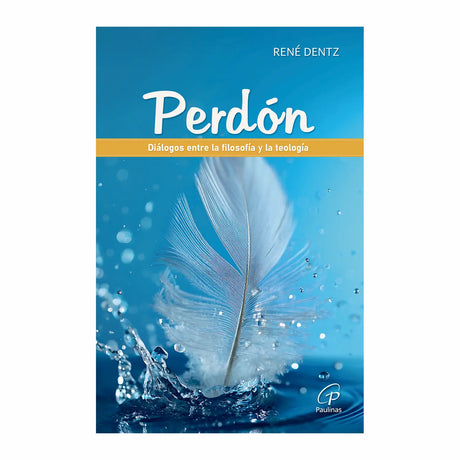
For those who wish to deepen their faith and keep prayer alive throughout the month, Paulinas offers its dear readers a precious devotional for praying for the faithful departed.It is not simply a book: it is a path of encounter and consolation, a guide that accompanies the believing heart through prayers, litanies, reflections, and liturgical celebrations dedicated to our loved ones who have passed on.
Each page invites us to pray with hope, to rediscover the value of the communion of saints, and to experience the tenderness of God who embraces his children in eternity. It is a pastoral tool that helps families, parish groups, and religious communities to experience the month of November as a true time of undying love.
Love stronger than death.
Saint Paul expressed it powerfully: “Love never fails”(1 Corinthians 13:8). This is the deepest truth of the Christian faith. When love is genuine, not even death can extinguish it. Therefore, every prayer we offer for the deceased is a spark of resurrection.
By praying for them, we too grow in holiness. We learn to view life from the perspective of eternity, to value each day as a gift, and to live reconciled with the past, at peace with the present, and hopeful for the future.
To pray is to love:
Our life is like a passing cloud.
And who takes us, who takes us
It is the breath of the Lord.
We prophesy that the Lord rules all.
What God did, He did out of love.
Our life is like a passing cloud, and it doesn't matter.
Neither money nor power matters.
Happy is he who, when that hour arrives,
He is serene and prepared to die.
We are all like a passing cloud,
no matter how many years we live,
when the final hour arrives,
The Lord will ask about what we did.
In heaven those who love will enter,
Those who loved as God commanded to love.
He who fought to see another person happy,
He will live eternally there in heaven.
Fr. Zezinho, sjc
Recommended product: